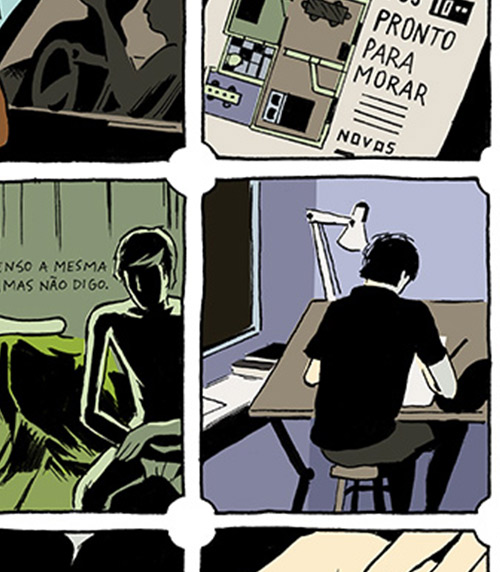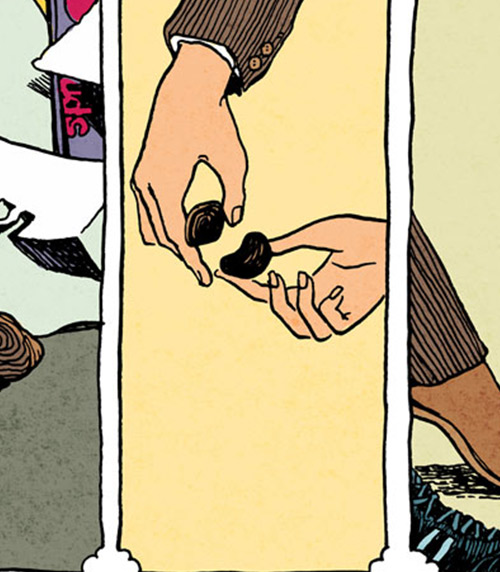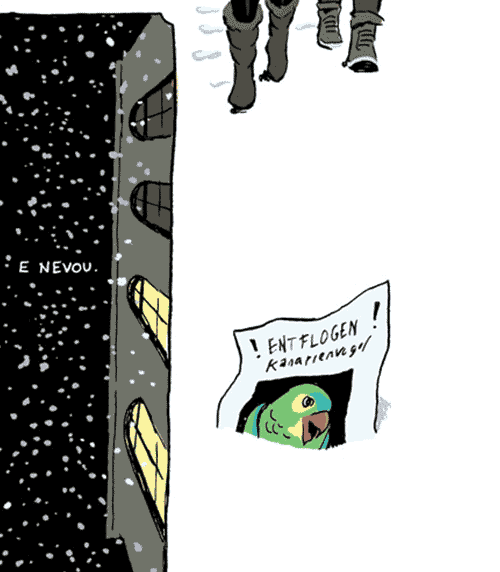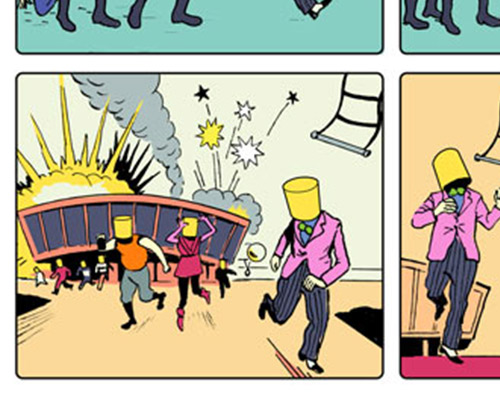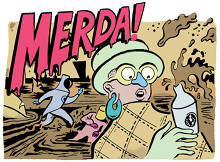


Fulano, Beltrano e Cicrano são personagens que remetem a uma certa nostalgia de algo que não vivi, mas que em algum momento me interessou muito: a era de ouro do rádio brasileiro, as raízes do samba e uma certa malandragem quase inocente.
Em “O figurante: Vera Lux” (Publicada na “C’est Bon Kultur”, revista em quadrinhos de Malmö, Suécia) faço uma referencia à Vera Cruz, estúdio cinematográfico Brasileiro que produziu filmes musicais e tantas outras maravilhas nas décadas de 40 e 50. Já em “Moleque Bossa Nova”(publicada na +SOMA) os personagens Fulano, Beltrano e Cicrano se deparam com a nova música que está surgindo, a Bossa Nova, representada aqui por esse jovem músico de classe média.
[EN]
Fulano, Beltrano and Ciclano are variations of a name that in English would be ‘John Doe’, which is why it is difficult to translate the linguistic complexity of this variation into Portuguese with precision.
These characters evoke a certain nostalgia for something I never experienced in life, but which at one point fascinated me greatly: the golden age of Brazilian radio, the roots of samba and a certain, almost innocent “malandragem” (a sort of roguish charm).
In ‘Vera Lux’, I make a reference to Vera Cruz, the Brazilian film studio that produced musical films and so many other wonders in the 1940s and 1950s. In ‘Moleque Bossa Nova’ (Bossanova kid), the characters Fulano, Beltrano and Cicrano encounter the new musical genre that is emerging – Bossa Nova – represented here by this young, middle-class musician.
These two stories were published in +SOMA magazine;
Veralux was also published in the Swedish magazine C’est Bon Culture
portugues & english version