

O primeiro passo é no escuro | The first step is in the dark
Esta pequena crônica é uma lembrança dessas experiências cotidianas de um inverno silencioso e surge a partir do texto da artista visual Marina Camargo sobre a sua (nossa) experiência de morar em Munique entre 2010 e 2011. A ideia inicial era fazer uma história em quadrinhos, mas o texto era tão completo e bonito que a melhor opção foi criar esta publicação.
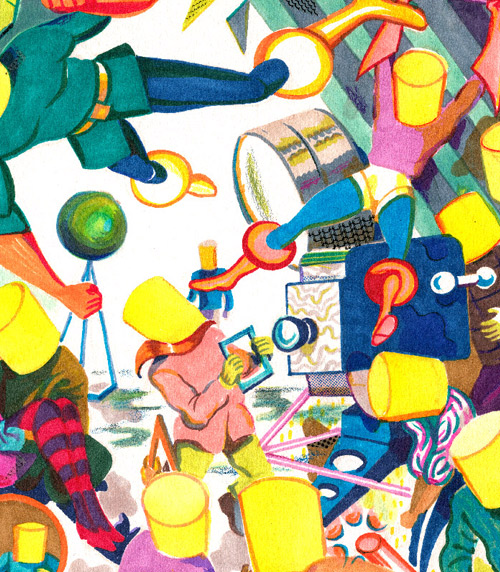
[EN] This personal project was developed with the visual artist Marina Camargo. Based on her writings about her (our) experience living in Munich in 2010/11. This drawings were supposed to become a comic book, but the texts were so dense and self-sufficient that the best to do was to create this tiny book. A souvenir of this unique experiences in a silent winter.
(full text in English)
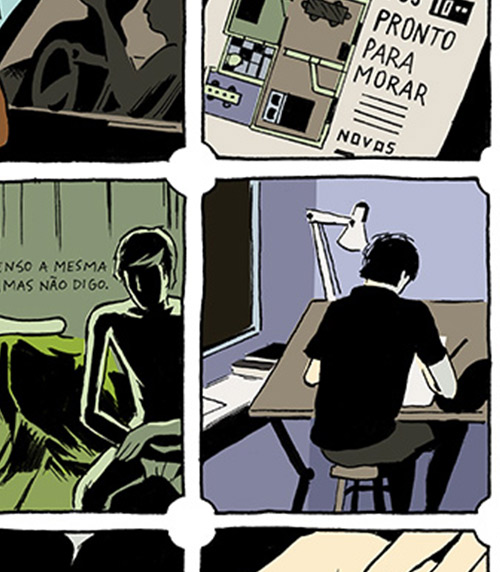
When I get home, at the entrance to the courtyard and the bike shed, it’s always night-time. I close my eyes and within a few seconds the lights come on. It’s like this every single day. So, by the time I cross the building’s inner courtyard to the entrance of our block, it’s already night-time. It’s about ten steps in the dark; I close my eyes to convince myself that it’s dark by choice, not because I really can’t see a thing. And the light comes on.
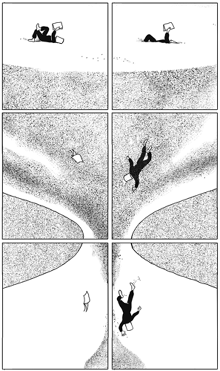
Walking in the darkness for a few seconds with my eyes closed has become routine. It’s night at 4.30 pm; I always return at night. Coming to Germany was also a step into the dark. Just like in science-fiction films, where, in an act of faith, the characters have to take a step into the void, defying precipices, only to discover that a bridge forms once that first step is taken.


Coming to Germany was also a step into the darkness. Just like in science fiction films, where, in an act of faith, the characters have to take a step into the void, defying the precipice, only to discover that a bridge forms once that first step has been taken.


Soon life falls into place, a routine takes shape and takes over our lives. Everything returns to normal, but in a different place. At this moment, a parallel life is created, one that will always be part of our other lives, but which may one day cease to exist. Or our other lives may disappear. Parallel existences are created throughout life, in the course of our journeys, as an intrinsic part of change.


Closing the eyes to cross the darkness. Closing my eyes and walking in the dark, trying to remember the number of steps needed to reach that corner of the courtyard where the sensor triggers and the light comes on.

What seemed like fear has turned into a slight imaginary thrill. Nothing happens. I keep my eyes closed. With each passing day, I know with greater precision how many seconds it takes for one light to come on, and then the next.


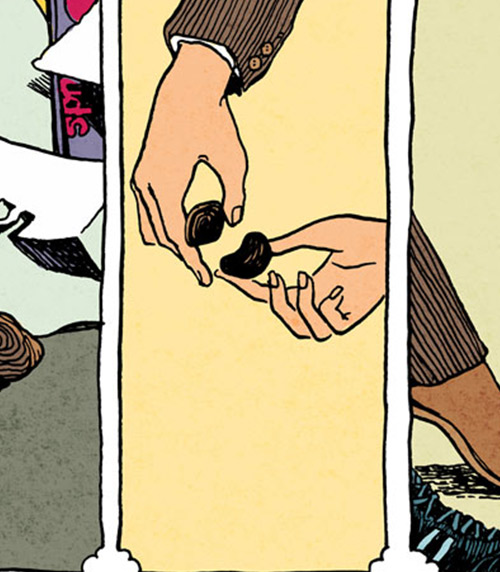
When the light in the courtyard came on, you could see a paving stone bearing the emblem of the city, a monk with outstretched arms. The paving was replaced, the stone removed, and then picked up by a neighbour who put the three broken pieces back together and left them there, on the doorstep of his house.


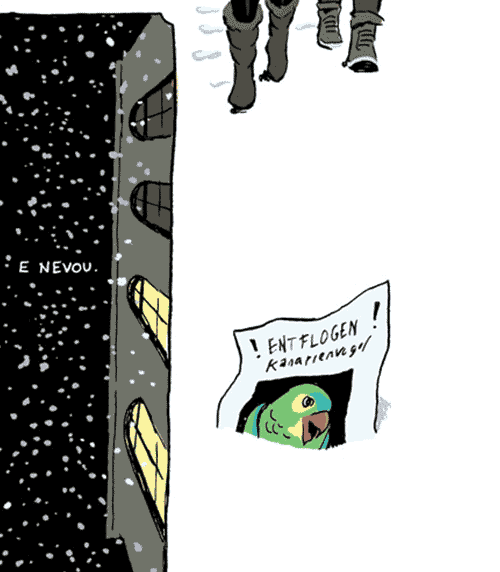
The corridors are extensions of the Germans’ homes. Noises are not, nor should they be, shared; silence prevails. But the plants from each flat are kept in the corridor, sheltered from the snow and exposed to the faint light of winter days. Shoes get dirty from rain, mud and snow, so they must be left outside the flats. And so, there is a chair so that one can take off one’s shoes before entering the home. ‘Arriving home’ does not necessarily mean entering the house. Although neighbours are closer during the winter because we share spaces – with our plants living side by side on the corridor window – little is heard, nothing is seen and not much is said. I find myself musing on the etymology of the German word for neighbour, NACHBAR. ‘Bar’ implies something that is potentially possible, as if we were adding the complement ‘it may be that / it is possible that / likely that’ to the word that follows ‘bar’.


As in WUNDERBAR: ‘Wunder’ means surprise or wonder, so it refers to something capable of surprising or dazzling us. ‘NACH’ means ‘towards’, always heading somewhere (not coming from).

Are the neighbours the ones we ‘can reach out to’? Could we, here in Germany, move towards one another? Reach out to one another?


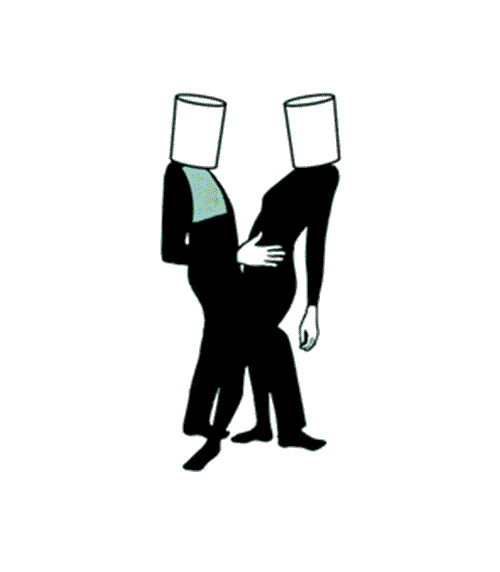
During winter, we are closer – even though we are still completely distant.

When the light turns on, the unknown becomes familiar and home can mean anywhere.

Marina Camargo, November, 2010